


TSA Liquid Rules and Checked-Bag Liquids for Air Travel
Packing liquids for air travel doesn’t need to be stressful.
Once you understand what the Transportation Security Administration allows, and what belongs in your carry on versus checked luggage, getting through airport security becomes predictable and efficient.
What Counts as a TSA Approved Liquid?
How much liquid can you bring in your carry on?
The short answer: each container must be 3.4 ounces (100 ml) or smaller, and all containers must fit inside a single quart sized bag per passenger.
For carry on baggage, TSA’s 3-1-1 rule permits liquids, aerosols, gels, creams, and pastes in travel sized containers up to 3.4 oz. These must all fit comfortably in one quart-size clear bag.
Each individual container should not exceed 3.4 ounces (100 ml).
Examples of items TSA considers “liquids”:
-
Shampoo, conditioner, and body wash
-
Toothpaste, face wash, and mouthwash
-
Lotion, sunscreen, and moisturizer
-
Perfume, cologne, and spray deodorant
-
Peanut butter, yogurt, and honey
-
Mascara, liquid foundation, and lip gloss
Larger liquids belong in checked baggage. Hazardous liquids are prohibited in both carry on and checked bags entirely.
Nobl Travel designs carry on luggage and accessories specifically to make organizing TSA approved liquids easier, with dedicated pockets and easy-access compartments that let you remove your liquids bag in seconds at the checkpoint.
Understanding TSA Liquid Rules and the 3-1-1 Policy
TSA liquid rules apply at all U.S. airports and have been standard protocol since the TSA’s 3-1-1 rule was implemented in August 2006 in response to a plot involving liquid explosives. This rule was introduced to reduce the risk of hazardous substances being carried onboard.
The TSA uses a broad definition for liquids, including any substance that can be poured, pumped, squeezed, spread, smeared, sprayed, or spilled. This covers more than you might expect.
Breaking down 3-1-1:
-
“3” = each container up to 3.4 ounces / 100 ml
-
“1” = all containers must fit in a single 1-quart clear bag
-
“1” = one clear bag per passenger in carry on luggage
The TSA’s 3-1-1 rule states that each passenger can only have one quart-size clear plastic bag for liquids, and all containers must fit within this bag.
Critical detail: The 3.4 ounces limit refers to the container size, not how much liquid remains inside. A half-empty 6-ounce bottle still violates the rule because the maximum capacity exceeds the limit.
TSA considers liquids aerosols, gels, creams, and pastes under identical regulations. This includes items like hair gel, mascara, liquid foundation, lens solution, and spray deodorant. These TSA rules apply exclusively to carry on baggage; checked luggage follows different guidelines covered below.
What Is TSA Approved Liquid for Carry On Baggage?
A “TSA approved liquid” simply means any liquid packed according to the 3-1-1 rule that isn’t on the prohibited items list. Toiletries such as shampoo, conditioner, body wash, mouthwash, and liquid makeup are considered liquids under TSA regulations.
Typical TSA approved liquids for carry on:
-
Toiletries: shampoo, conditioner, body wash, mouthwash, liquid soap
-
Personal care: moisturizer, sunscreen, hand sanitizer, contact lens solution
-
Cosmetics: liquid foundation, mascara, lip gloss, liquid eyeliner, powder makeup (allowed without restriction)
-
Food and drinks: water or juice purchased after security, yogurt, salad dressing, nut butters
Each container must display clear volume labeling-either commercially labeled or decanted into mini bottles with visible markings. You’ll need to use a resealable, transparent plastic bag (standard zip-top works fine) as your toiletry bag, kept accessible in your carry on bag for the screening process.
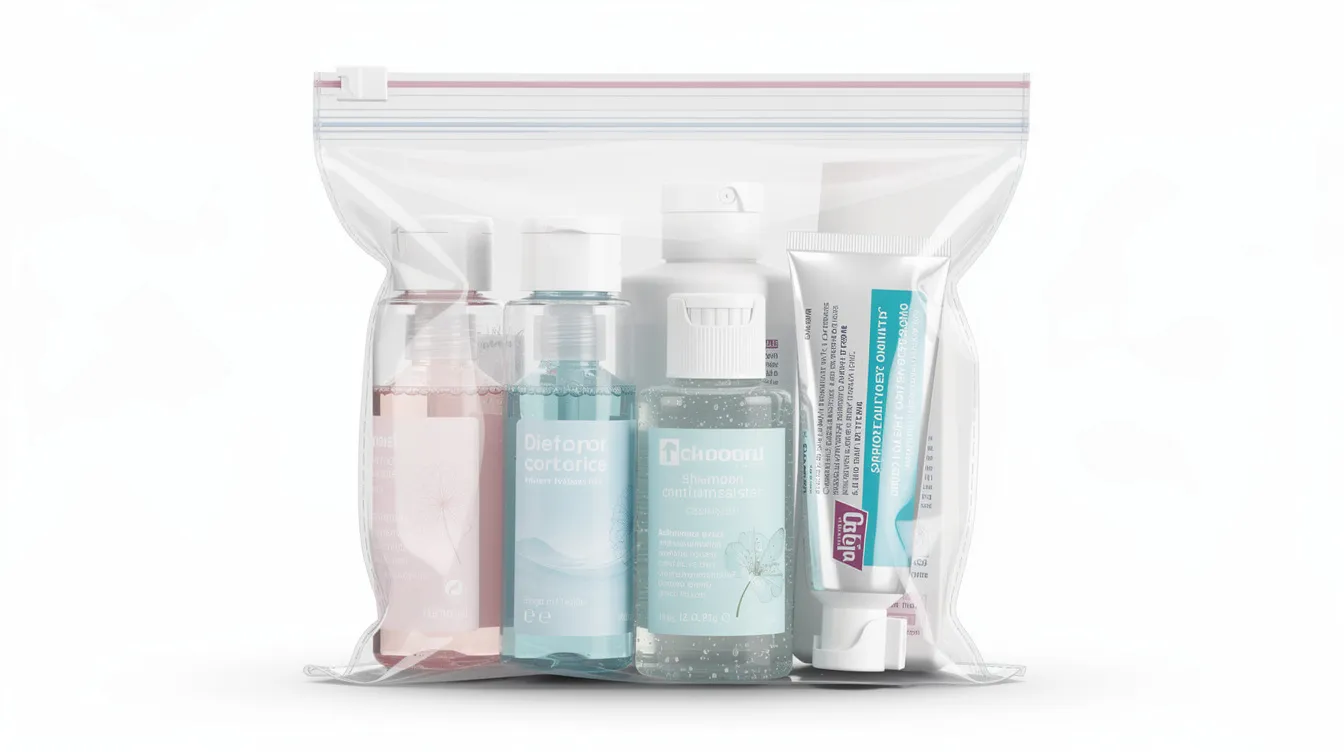
Organize liquids in a front pocket or top compartment of your carry on. Nobl Travel carry-ons feature exactly this design, letting you pull out your clear bag without unpacking everything else.
Liquids in Checked Baggage vs Carry On Luggage
TSA liquid limits differ significantly between carry on and checked bags. Understanding both sets of rules helps you pack liquids securely and avoid checkpoint surprises.
For checked baggage:
-
No strict 3.4-ounce container size limit for most liquids in your checked luggage
-
You can pack full size bottles of shampoo, conditioner, lotion, wine, olive oil, etc
-
Hazardous materials (flammables, corrosives, certain aerosols) remain prohibited or restricted even in checked bags
-
Alcoholic beverages over 140 proof are banned; those between 48-140 proof are limited to 5 liters per passenger
For carry on luggage:
-
Liquids must follow the 3-1-1 rule (3.4 ounces, single quart sized bag, one bag per passenger)
-
Over-limit containers must either go into checked luggage or be discarded at airport security
Preventing leaks in checked bags:
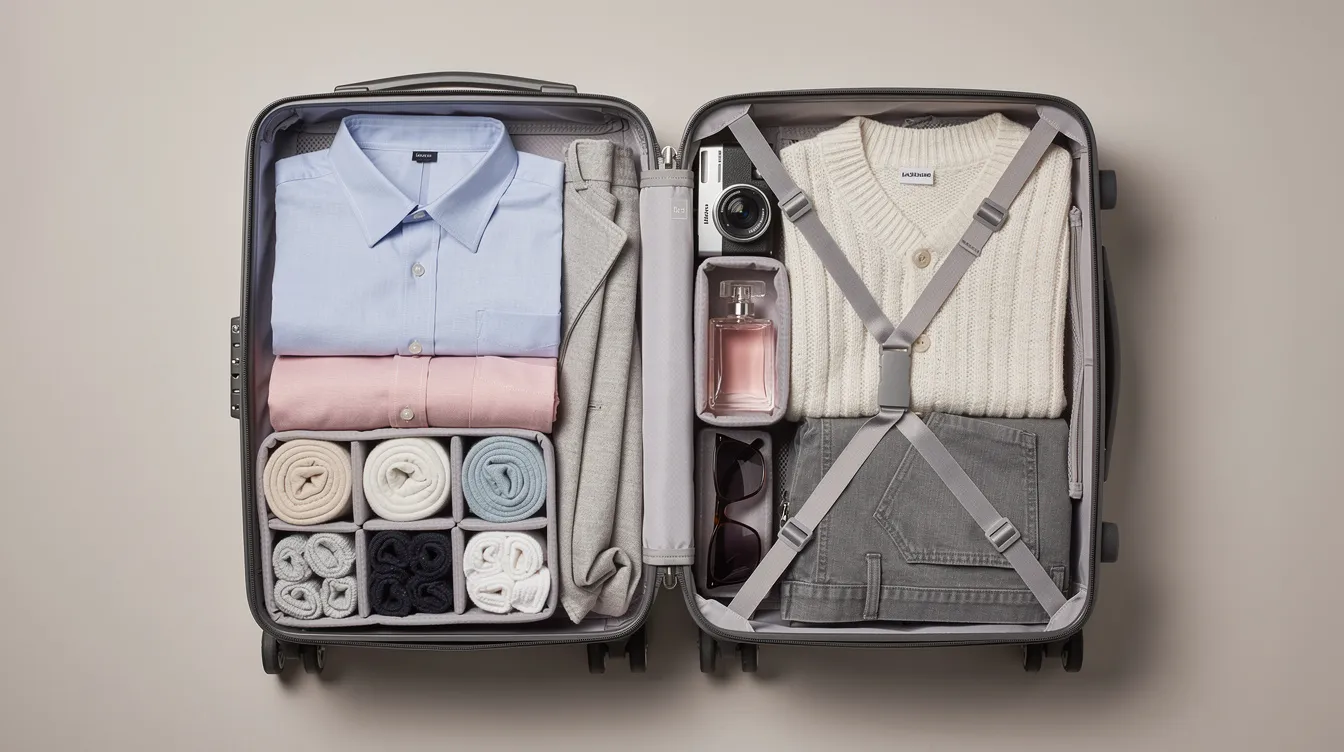
To prevent leaks in checked luggage, first wrap the top of your liquid container with tape to secure the cap. Then place it in a zipper-top plastic bag before sealing it in a larger bag. When packing liquids in checked luggage, keep them in the center of your suitcase surrounded by clothing or soft items to cushion against impacts. For added protection, consider using hard-sided containers or specialized shipping bags designed for transporting liquids. This can minimize the risk of breakage during travel. You can also use bubble wrap around glass bottles for extra cushioning.
Nobl Travel check-in suitcases feature rigid shells and compression systems that help keep bottled liquids stable throughout handling.
What counts as a liquid
TSA’s definition is much broader than “things that pour.” Its carry-on rule covers liquids, aerosols, gels, creams, and pastes. Its food guidance says that liquid or gel food items over 3.4 ounces should go in checked baggage if possible. That is why items such as peanut butter, yogurt, jam, hummus, dips, and sauces so often catch people off guard.
The agency’s own item list is blunt about this. Peanut butter is allowed in carry-on baggage only when it is 3.4 ounces or less, and a 2023 viral dispute over a confiscated jar became a shorthand example of how rigid the liquids logic can feel to travelers. The story got traction because it highlighted how ordinary foods move into the “liquid” category once they are spreadable.
There is one unusual but useful exception: frozen liquid items may pass if they are frozen solid at screening. Once they become slushy or partly melted, they are treated as liquids again. That is a handy detail for ice bottles, frozen packs, or chilled foods, but it is not a loophole for half-frozen toiletries.
Key Exceptions to the 3.4 Ounces TSA Liquid Limit
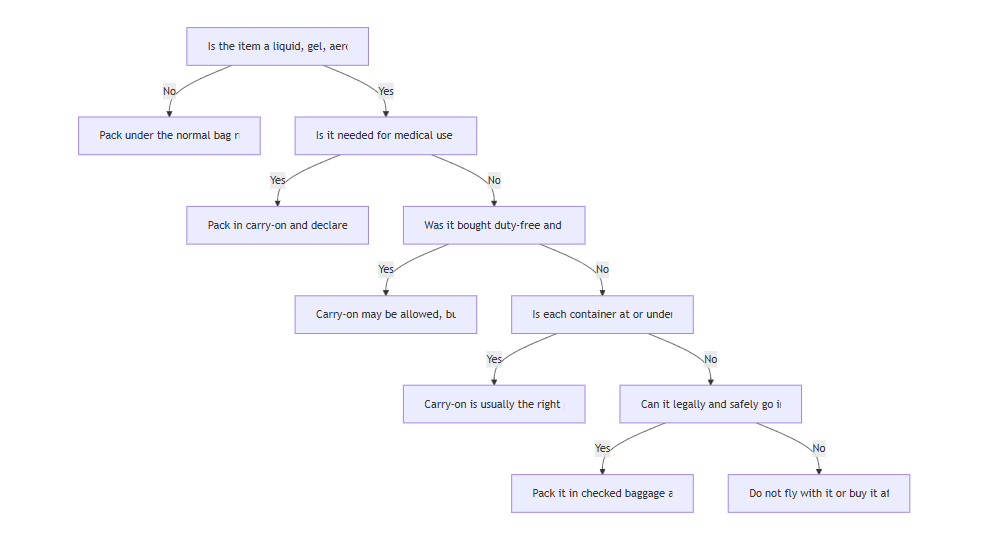
TSA allows certain liquids in reasonable quantities greater than 3.4 oz, but they must be declared and screened separately. Security officers will conduct additional screening on these items.
Main exception categories:
-
Medically necessary liquids and medications (prescription syrups, liquid inhalers, saline solution)
-
Infant and child nourishment (baby formula, breast milk, toddler drinks, puree pouches)
-
Duty free liquids purchased after security, including on international connecting flights
-
Certain frozen items and medically necessary ice packs and freezer packs
For each exception
-
Remove the item from your carry on baggage,
-
Notify the TSA officers before screening
-
Expect the x ray machine inspection or manual testing.
The final decision rests with the TSA officer at the checkpoint. These exceptions are valid across all U.S. airports, but officer discretion applies.
Medications and Medically Necessary Liquids
Medically necessary liquids are exempt from the standard 3.4-ounce limit and can be brought in reasonable quantities for your trip. There’s no fixed maximum-TSA assesses based on your journey length and medical need.
Examples of prescription liquids and medical liquids:
-
Liquid prescriptions and over-the-counter medicines (cough syrup, liquid vitamins)
-
Insulin and injectable medications
-
Saline solution and wound-care fluids
-
Eye drops in larger quantities
How to pack them:
-
Keep medications in original labeled containers when possible
-
Pack them in carry on luggage, not checked baggage, to avoid loss or temperature issues
-
Separate them from the quart bag and tell officers they are medically necessary at security
Gel ice packs for keeping medications cool can exceed 3.4 ounces if used for medical purposes-declare these as well. TSA may open containers or use test strips to clear liquids in your checked or carry on.
Baby Formula, Breast Milk, and Child Nourishment
TSA treats breast milk, baby formula, and baby food as essential nourishment, exempting them from standard carry on restrictions regardless of total volume.
What parents and caregivers can bring:
-
Breast milk (even if traveling without the child)
-
Prepared formula and powdered formula with separate water
-
Baby food in pouches or jars
-
Juice and milk specifically for infants and toddlers
Screening requirements:
-
These items do not need to fit inside the quart-size clear bag
-
Must be removed from carry on baggage and declared to TSA officers at the checkpoint
-
May be X-rayed, visually inspected, or tested for explosives
Rules for ice packs:
Gel and freezer packs to keep breast milk or formula cold are allowed, even if partially melted. Frozen liquids that are completely solid at screening do not count toward the 3.4-ounce limit. But if they are partially melted, they must comply with standard liquid regulations.
Using a dedicated insulated compartment or packing cube keeps baby liquids organized for quick inspection.
Duty-Free Purchases and Connecting Flights
Duty free liquids like wine, whiskey, and perfume often exceed 3.4 ounces but can still travel in your carry on under specific conditions.
TSA requirements for duty-free liquids:
Duty-free liquids purchased internationally can be carried in a secure, tamper-evident bag in your carry-on, even if they exceed 3.4 ounces. Always have the original receipt handy. Remember, they must be purchased within the last 48 hours.
-
Must be sealed in a Security Tamper-Evident Bag (STEB)
-
Must include the original receipt showing recent purchase
-
Bag must remain sealed and unopened until final destination
On a connecting flight:
-
For international arrivals connecting to a U.S. domestic flight, duty-free liquids in STEBs can usually remain in carry on luggage if they pass screening
-
If security re-screens bags and STEBs are compromised, travelers may need to move liquids to checked baggage or discard them
When in doubt-especially with multiple connections-pack duty-free liquids in checked luggage at your first opportunity. A 750ml bottle of wine purchased internationally isn’t worth losing at your third security checkpoint.
Alcohol
Alcohol is where the carry-on and checked-bag rules most often collide.
In the United States, TSA says alcoholic beverages at 24 percent ABV or less are not subject to quantity limits in checked bags. FAA PackSafe says beverages over 24 percent and up to 70 percent ABV must be in unopened retail packaging and are capped at 5 liters total per passenger.
Anything over 70 percent ABV is prohibited because of fire risk. TSA also reminds travelers that mini bottles in carry-on baggage still have to fit the small-liquids rule. FAA says passengers cannot drink from their alcohol bottle onboard unless the airline serves it.
The same broad alcohol thresholds appear in UK, Canadian, and Australian aviation guidance. Local screening rules still govern how much can go through the checkpoint in hand luggage.
In other words, whiskey may be acceptable in checked baggage while still being blocked in a normal carry-on unless it qualifies under a duty-free exception.
How other major markets handle liquids
For travelers who fly internationally, the big mistake is assuming that “100 milliliters everywhere”.
The baseline remains similar across many countries, but scanner upgrades, domestic-versus-international distinctions, and airport-by-airport exceptions now matter more than they did a few years ago.
Comparison of current liquid rules in major markets
|
Market |
Standard carry-on liquid rule |
Main exceptions |
Important current wrinkle |
|---|---|---|---|
|
United States |
3.4 oz / 100 mL per container; one quart-size bag; one bag per passenger |
Medications, baby formula, breast milk, toddler drinks, duty-free under strict transfer conditions |
Some CT or Pre Check lanes let passengers keep compliant liquids in the bag, but the size rule remains in place |
|
European Union |
100 mL per container; one one-liter resealable bag |
Medicines, baby food and milk, duty-free in sealed security bag |
EU reaffirmed the 100 mL cap at certain CT-equipped airports from September 2024 after a temporary technical issue |
|
United Kingdom |
Official baseline remains 100 mL in hand baggage |
Essential medicines may exceed 100 mL with supporting information; airport-specific exceptions exist |
Heathrow said in January 2026 that all its lanes now use CT scanners and local departures can carry up to 2 L, so it is now a patchwork system |
|
Canada |
100 mL per container in one one-liter clear resealable bag |
Medications, infant liquids, duty-free in official security bag |
At CT-equipped lines, permitted liquids may stay in the carry-on bag |
|
Australia |
100 mL or 100 g per container, all in one resealable bag |
Medical devices/items, some special cases, duty-free in sealed tamper-evident bag |
Applies mainly to international flights, transit, and certain linked domestic segments; not to checked baggage or most domestic flights |
Packing advice and FAQ
The clearest rule of thumb is this: if a liquid is ordinary, full-size, and not needed in the cabin, put it in checked baggage; if it is medically necessary, for infant feeding, or small enough for the bag rule, keep it accessible in your carry-on; and if it is flammable, unusual, or unclear, check the official item database before you leave home.
TSA, CATSA, the UK CAA, and Australia’s screening guidance all say some version of the same thing: uncertainty at home is far cheaper than uncertainty at the checkpoint.
How to Pack TSA Approved Liquids for Faster Airport Security
-
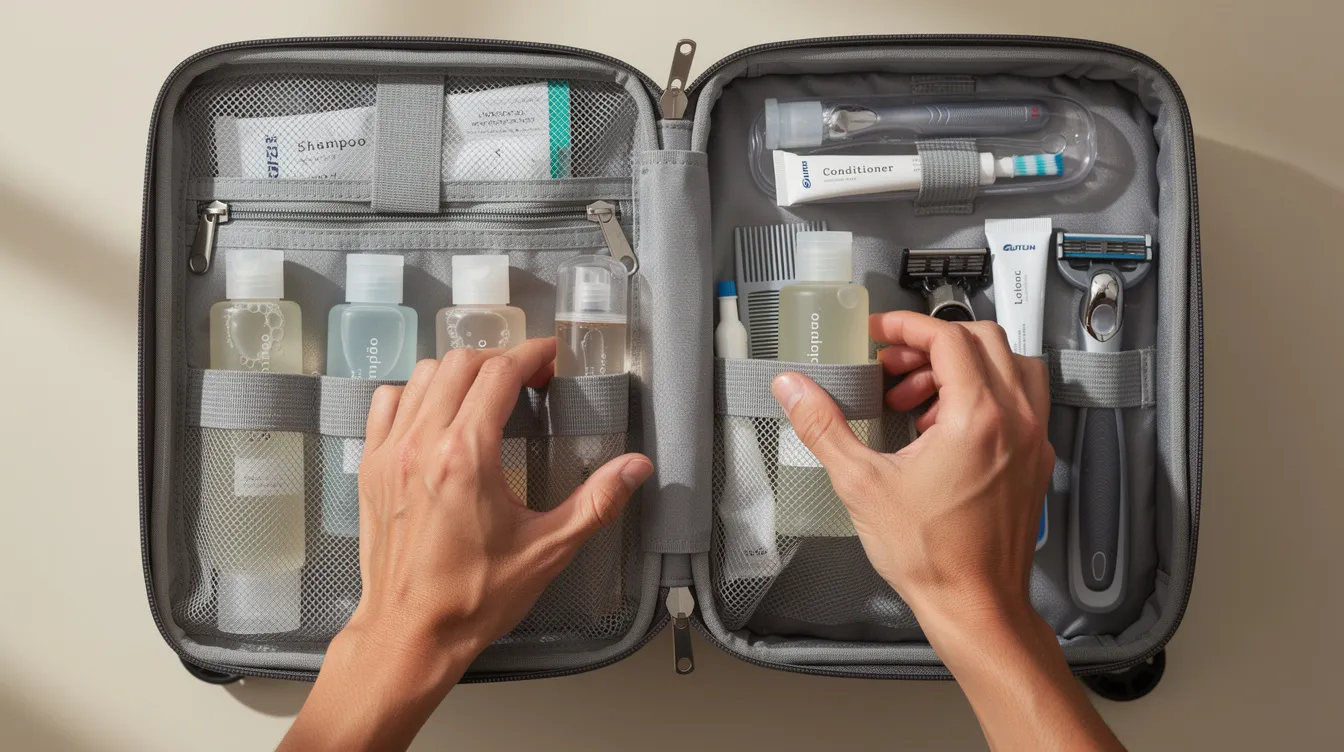
Decant larger toiletries into travel bottles labeled 3.4 ounces / 100 ml or less
-
Place all non-exempt liquids in a single quart-size clear bag
-
Keep the clear bag in an exterior pocket of your carry on for easy removal
-
Prevent leaks by ensuring all caps are tightly secured
At the security checkpoint:
-
At standard screening, remove the clear bag and place it in a bin separately from your carry on
-
With TSA PreCheck, in many airports you can leave the clear bag inside your carry on, but the 3.4 ounces limits still apply
-
Portable electronic devices must also be removed at standard screening-keeping liquids separate speeds everything up
Using a structured personal item or Nobl Travel carry on with a dedicated “liquids pocket” eliminates rummaging in line. Pre-pack 24–48 hours before departure to confirm everything meets TSA liquid rules and shift overflow to checked baggage if needed.
Smart Packing Tips for Carry On Liquids
These optimization tips work especially well for frequent flyers and minimalist packers who want to bring liquids efficiently.
-
Prioritize multi-use products: combined shampoo/body wash, moisturizer with SPF, or 2-in-1 cleanser reduces bottle count
-
Swap liquids for solid alternatives when possible:
-
Solid shampoo and conditioner bars
-
Solid deodorant and stick sunscreen
-
Bar soap instead of body wash
-
-
Pack only what you need until arrival, then purchase liquids at your destination for longer trips
-
Use leak-resistant silicone bottles with locking caps-Nobl Travel accessories are designed to stay secure inside our luggage systems
-
Organize liquids, electronics, and documents into separate packing zones for faster unpacking at hotels and checkpoints
Special Situations: International Flights and Different Airport Security Rules
While TSA rules apply when departing from the United States, foreign security agencies may have slightly different liquid policies. However, most align closely.
Key data points:
-
TSA screens approximately 3.3 million carry-on bags per day across nearly 440 U.S. airports
-
Most major regions (EU, UK, Canada, Australia) use similar 100 ml / 3.4-ounce limits and quart-size clear bag rules for carry on liquids
-
The EU has begun testing advanced liquid scanners at select airports that may eventually relax these restrictions for international travel
What to check before you fly:
-
The rules at your departure airport
-
The rules for any country where you have a connecting flight, especially if changing terminals and re-clearing security
When re-entering U.S. airport security after an international arrival and domestic connection, standard TSA liquid rules apply again. On complex itineraries with multiple connections, placing non-essential liquids and large duty-free purchases in checked baggage reduces confiscation risk significantly.
Managing Liquids on International Connecting Flights
Picture this: you purchase duty-free perfume in Paris, then connect through Chicago to your final U.S. destination. What happens to that bottle?
Best practices:
-
Keep duty-free liquids sealed in STEBs with receipts until your entire journey is complete
-
If you know you’ll re-clear security at a foreign or U.S. airport, plan space in your checked bag to repack liquids if necessary
-
Avoid over-reliance on airport shops for essential toiletries-pack TSA approved travel sizes in carry on from the start
Nobl Travel’s coordinated carry on and checked luggage sets make shifting items between bags during layovers simple when airports permit baggage access.
What changed through May 2026
TSA did make a real change in May 2023, when it ended the temporary pandemic-era exception that had allowed one 12-ounce hand-sanitizer bottle in carry-on baggage and returned sanitizer to the normal 3-1-1 rule.
The next major change came in Europe. In July 2024, the European Commission said that certain EU airports using advanced cabin-baggage detection systems would have to return to the standard 100 milliliter maximum from September 1, 2024. The Commission said the move was a precaution tied to a temporary technical issue, not to a new threat. That reset mattered because some airports had already begun telling passengers they could carry larger liquid containers with newer scanners.
In the United States, the big 2025 development was rhetorical rather than regulatory. In July 2025, Homeland Security Secretary Kristi Noem publicly said she was questioning the liquids rule and hinted that a future announcement could address liquid-size limits. But she did not give a timetable or a new rule, and the current TSA public pages still show the standard 3.4-ounce / quart-bag framework in place.
In the UK, the story turned into a live example of uneven change. The government had already granted some airports more time in April 2024 to install next-generation security scanners. Then, in January 2026, Reuters reported that Heathrow had completed its full CT rollout, allowing passengers there to keep liquids and laptops in their bags and carry containers up to two liters on departure.
Choosing the Right Luggage and Accessories for TSA Approved Liquids
The stress of liquid rules drops considerably when your luggage is designed with compliance in mind. The right bag turns a checkpoint hassle into a 30-second routine.
What to look for in carry on bags:
-
Easy-access outer pocket sized to hold a quart-size clear bag
-
Structured interior with dividers or organizers to keep liquids upright
-
TSA-approved locks on zippers for checked luggage security
With Nobl Travel’s lifetime limited warranty and 100-day trial, you’re investing in luggage built for repeated trips through airport security. Non spillable wet batteries, live fish, and other unusual items aside, most travelers deal with the same liquid questions every trip. The right luggage system turns compliance from something you worry about into something you forget about.
Think of your carry on, checked bag, and personal item as a coordinated setup. When each piece has designated zones for liquids, tech, and clothing, packing becomes intuitive and security becomes fast.
