


Polypropylene vs Polycarbonate Luggage: Which is Better
There is a massive difference in how hard-shell suitcases are manufactured. Some suitcases crack after a few rough flights, while others come back from baggage claim with only surface scuffs. A lot of that difference comes down to the shell material.
Two of the most common hard-shell luggage materials are polypropylene and polycarbonate.
Both materials - polypropylene and polycarbonate are widely used in luggage manufacturing. Each come with their own set of unique advantages for travelers.
Polypropylene materials are especially valued for their versatility, cost-effectiveness, and excellent chemical resistance compared to polycarbonate, making them popular for high-volume and consumer applications.
Both are thermoplastic polymers. Both are used in molded luggage shells. Both can work well for travel. However, there are key differences between polypropylene and polycarbonate that affect their performance once your suitcase is shoved into an overhead bin, stacked under checked bags, rolled over rough surfaces, or left in a hot car trunk.
Bottom line: polypropylene luggage is lighter and usually more affordable. Polycarbonate luggage is stronger, more impact resistant, more rigid, and usually the better long-term choice for frequent travelers, checked luggage, and international trips.
If you are choosing between these two materials, the right answer depends on how often you travel, whether you check bags, how much weight you carry, and how long you expect your suitcase to last.
Polypropylene vs Polycarbonate: The Core Difference
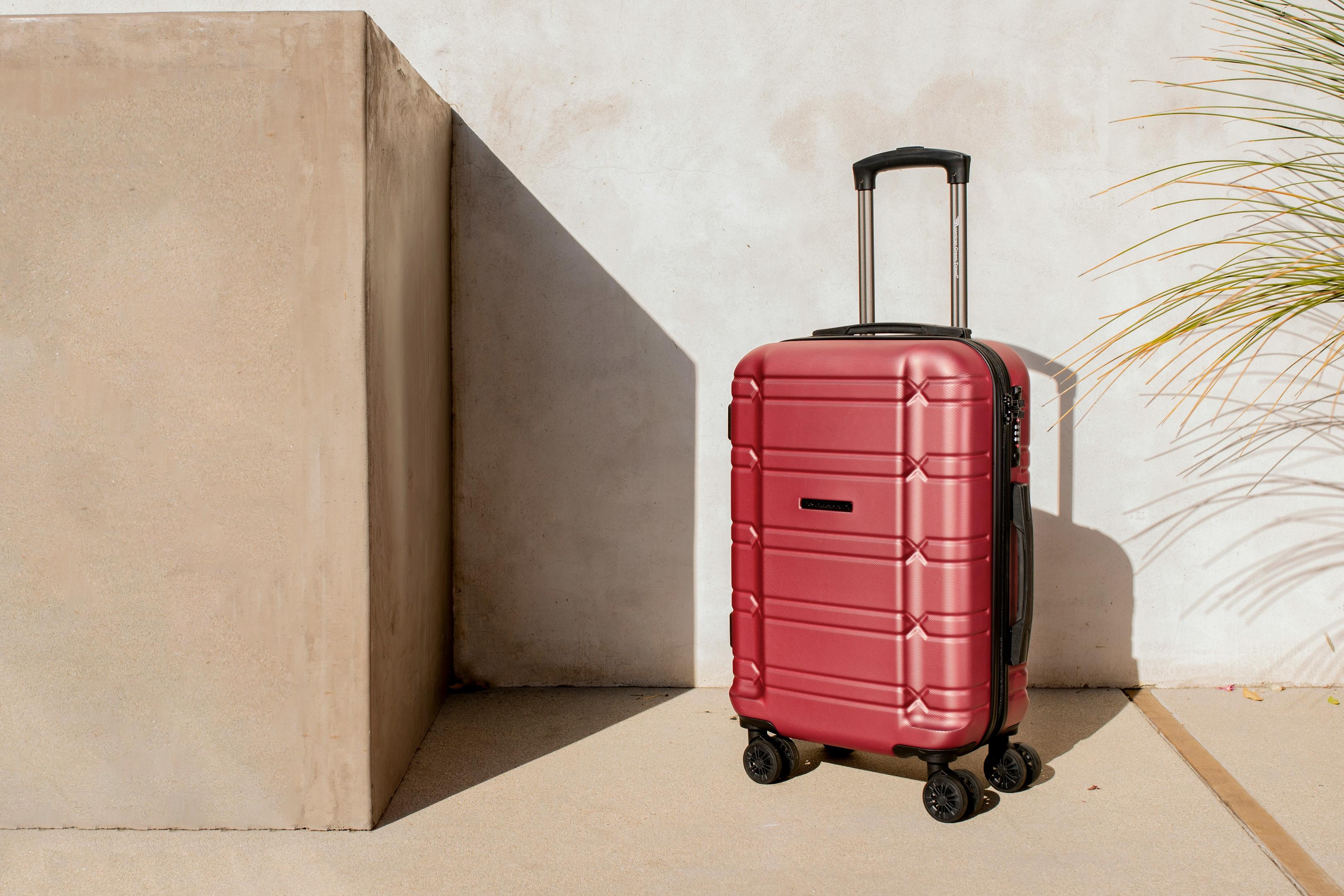
Polypropylene prioritizes low weight and lower cost, making it a cost effective option for many travelers. Polycarbonate prioritizes strength, impact resistance, heat resistance, and premium finish, and is suitable for those who prioritize durability and protection.
Polypropylene luggage is usually a good fit for casual travelers, students, short trips, and people who want lightweight luggage at a lower price. It is flexible, light, and practical for moderate use.
Polycarbonate luggage is better for frequent travelers, checked bags, rough baggage handling, and long-term durability. It costs more upfront, but the shell is more likely to withstand repeated pressure, impact, and temperature changes.
Here is the simplest way to think about it:
|
Material |
Best Strength |
Main Trade-off |
|---|---|---|
|
Polypropylene |
Lightweight and affordable |
Lower impact resistance |
|
Polycarbonate |
Stronger, tougher, more premium |
Heavier and usually more expensive |
|
|
|
|
Both materials have distinct advantages. When comparing the two materials, polypropylene makes sense when weight and price matter most, while polycarbonate makes sense when durability and protection matter most. Consider these factors to make an informed decision when choosing your luggage material.
What Is Polypropylene Luggage?
Polypropylene, often shortened to PP, is a lightweight thermoplastic polymer used in packaging, automotive parts, consumer goods, medical components, and some luggage shells. It has only been around for 70 years, so kind of young in engineering standards. It is a semi-crystalline material that gives it flexibility and helps it absorb some bending without immediately snapping.
Polypropylene is also known for its excellent fatigue resistance, making it ideal for living hinges that can bend repeatedly without falling apart.
In terms of luggage, polypropylene is commonly used for budget or mid-range hard shells. It can be molded into lightweight suitcase bodies through injection molding, blow molding, and other plastic processing methods.
The biggest advantage of polypropylene luggage is its lightweight properties. Polypropylene is one of the lightest plastics available, with a density of 0.89 - 0.93 g/cm³, which makes it much lighter than polycarbonate by volume. For travelers trying to stay within airline weight limits, that lighter empty suitcase can make packing easier.
It is also known for its excellent chemical resistance to many everyday substances, including dilute acids, dilute alkalis, and alcohols. This sturdy chemical resistance makes it suitable for food packaging and other food contact applications. Regarded as safer for direct food contact, it is often microwave-safe. This comes in handy when luggage is exposed to rain, cleaning products, sunscreen spills, airport grime, and general travel mess.
But polypropylene has its limitation. It is not as impact resistant or sturdy as polycarbonate. It can become more brittle in cold weather. Untreated polypropylene does not handle long term UV exposure as well as higher-grade materials with stabilizers.
What Is Polycarbonate Luggage?
Polycarbonate or PC is a high-performance thermoplastic polymer. It is well known for its rigidity, impact resistance, excellent durability, and optical clarity.
Polycarbonate plastic is used in products that need strength without excessive weight. Namely the categories like eyewear lenses, safety goggles, headlamp lenses, electronics housings, medical devices, automotive parts, light covers, surgical instruments, and incubators. It offers excellent light transmission, making it suitable for lenses and clear storage.
Polycarbonate is often described as unbreakable and is roughly 250 times stronger than glass. It offers excellent durability and is favored for demanding applications. Polycarbonate also has good chemical resistance, particularly against alcohols, acids, and oils. This makes it suitable for chemically demanding environments.
In luggage, polycarbonate is used for higher-durability hard shells because it can flex under impact. That's why polycarbonate luggage perform well when bags are dropped, stacked, compressed, or checked.
Polycarbonate has a density of about 1.20 g/cm³, so it is heavier than polypropylene by volume. But the added weight comes with better mechanical properties, better heat resistance, and stronger impact performance.
This is why many premium suitcases use polycarbonate or polycarbonate blends instead of polypropylene or ABS plastic.
Why Luggage Material Matters for Travelers
Your suitcase deals with more stress than it may seem.
Carry-on bags get lifted into overhead bins, squeezed beside other hard shells, dragged through airport terminals, and sometimes gate checked at the last minute. Checked luggage faces even more pressure. Checked bags are tossed onto conveyor belts, stacked under heavy cargo, pushed through airport handling systems, and exposed to temperature swings in airport storage areas.
Different travelers have different needs. If you travel once or twice a year, a polypropylene suitcase may be enough. If you travel often, check bags, pack fragile items, or fly internationally, shell strength becomes much more important.
A good suitcase material should handle:
-
Rough handling
-
Repeated impact
-
Temperature fluctuations
-
Fully packed loads
-
Scratches and scuffs
-
Long-term wheel, frame, and shell stress
-
Airport storage and baggage claim pressure
This is where polycarbonate luggage pulls ahead. Polypropylene luggage can work well for lighter use, but polycarbonate gives better protection when travel gets rough.
For more tips on protecting your suitcase beyond the shell material, read NOBL’s guide on how to protect luggage from damage.
Strength and Impact Resistance
Impact resistance is one of the biggest differences between polypropylene and polycarbonate.
Polypropylene has moderate impact resistance. It can flex, which helps endure light to moderate stress. But under harder impact, heavy compression, or cold temperatures, polypropylene is more likely to crack or deform.
Polycarbonate has much stronger impact resistance and offers excellent durability. It can bend under pressure and return closer to its original shape, which helps the shell absorb hits without immediately breaking. This is especially useful for checked luggage, where bags are rarely handled gently.
In terms of tensile strength, polycarbonate ranges from 28 to 75 MPa, while polypropylene ranges from 9 to 80 MPa. For flexural yield strength, polycarbonate falls between 36 and 103 MPa, whereas polypropylene ranges from 0.296 to 180 MPa.
Polypropylene Strength Properties
Polypropylene offers decent durability for casual travel. It is flexible, lightweight, and practical for carry-on luggage that stays mostly with the traveler.
Its lower density helps keep suitcase weight down, which can be useful if you tend to pack close to airline limits. Polypropylene also works well for molded products because it can be processed through injection molding and related methods.
The trade-off is lower structural strength. Polypropylene luggage is more likely to show stress damage over time if it is repeatedly checked, overloaded, or exposed to cold conditions.
Choose polypropylene if you want a lighter bag, fly only a few times per year, and mostly use carry-on luggage.
Polycarbonate Strength Properties
Polycarbonate luggage is built for heavier use. It has stronger mechanical properties, better impact resistance, and better structural stability across changing conditions.
This is why polycarbonate plastic is common in safety goggles, eyewear lenses, automotive lighting, electronic components, and other products where strength and clarity matter.
For luggage, this matters because a suitcase shell has to protect the contents inside. A polycarbonate shell can absorb impact by flexing, which helps reduce the chance of cracking at corners and edges.
Choose polycarbonate if you check bags, travel often, carry fragile items, or want a suitcase that can handle years of airport handling.
Weight and Density
Weight matters before you pack a single item.
Polypropylene has a density of about 0.905 g/cm³. Polycarbonate has a density of about 1.20 g/cm³. By volume, that makes polycarbonate roughly one-third denser than polypropylene.
In plain terms, polypropylene luggage is usually lighter.
That does not always mean a polypropylene suitcase is automatically better for travel. Suitcase weight also depends on frame design, wheels, handles, locks, lining, compartments, corner protection, and shell thickness.
Polycarbonate’s added strength can allow brands to build thinner, stronger shells. A well-designed polycarbonate suitcase may not feel dramatically heavier than a cheaper polypropylene model, especially once both are packed.
For carry-on travelers, weight matters because some airlines have strict carry-on luggage limits. Before buying a new bag, check NOBL’s carry-on luggage size chart to compare common airline size and weight rules.
For checked luggage, weight matters for a different reason. Most international checked bags are measured by size and weight limits, with 62 linear inches and 50 pounds being common guidelines for economy travelers. NOBL’s international travel luggage size guide breaks this down in more detail.
Temperature Performance
Temperature can affect hard-shell luggage more than most travelers expect.
A suitcase may sit in a hot car trunk, a cold garage, an airport storage area, or an aircraft cargo hold. Different type of environments have different impact, especially if the material is already under pressure from a full packing load. When comparing these two materials, it's important to consider their melting points:
-
polycarbonate (PC) has a melting point ranging from 288 to 316 °C
-
while polypropylene (PP) has a melting point between 61 and 221 °C
This difference in melting point is proof that polycarbonate has more heat resistance than polypropylene. Thus polycarbonate is the suitable pick for extreme temperature variations.
Polypropylene Temperature Limits
Polypropylene melts or degrades at lower temperatures than polycarbonate. Standard polypropylene grades are often rated around 80°C for continuous use, though exact performance depends on the grade, additives, and shell design.
For everyday travel, that is usually enough. A polypropylene carry-on will not fail when placed in a warm hotel room or a sunny airport terminal. It will survive the test.
Polypropylene luggage can struggle under heavy pressure and extreme weather. Freezing winter temperatures make the plastic brittle and easy to crack, while intense summer heat can soften the shell and warp its shape. This is especially true for checked bags, long-term storage, and cheap suitcases made without strong protective additives.
Polycarbonate Temperature Limits
Polycarbonate has better heat resistance and better temperature stability. It can maintain rigidity at higher temperature and remains tougher at lower temperatures.
That makes polycarbonate luggage a better option for international travelers who move between climate zones, check bags often, or leave luggage in cars, airport storage, or cargo areas.
Good heat resistance is one reason polycarbonate is used in automotive parts, electronic components, safety applications, and other products that need to hold shape under stress.
Chemical Resistance and Daily Durability
Luggage comes into contact with more than clean airport floors.
Rain, spilled toiletries, sunscreen, cleaning sprays, oils, dirt, and grime can all affect the surface of a suitcase over time.
Polypropylene is chemically resistant, making it suitable for cost-sensitive, high-volume applications where exposure to chemicals is likely. It resists many common substances, including dilute acids, dilute alkalis, alcohols, and many organic solvents. However, polypropylene has low UV resistance and can become brittle when exposed to prolonged sunlight unless UV stabilizers are added.
Polycarbonate also offers resistance to many organic solvents, but it is more sensitive to certain chemicals. In particular, exposure to organic acids can cause rapid breakdown of polycarbonate, and some cleaners, oils, and harsh substances may lead to stress cracking or surface damage over time.
For travelers, this does not mean polycarbonate is fragile. Clean your polycarbonate luggage with mild soap, water, and a soft cloth instead of harsh solvent-based products to make it last longer.
Scratch Resistance and Appearance
Neither polypropylene nor polycarbonate is fully scratch-proof.
Polypropylene luggage usually has a matte or textured surface. That texture can hide small scuffs better from everyday wear and tear. If you care less about a polished look and more about practicality, polypropylene can be forgiving.
Polycarbonate luggage often has a glossier, smoother finish. That premium finish looks better when new, but scuffs are more visible on them. Many premium polycarbonate bags now use textured finishes, protective coatings, or include luggage covers to reduce visible wear.
If scratch visibility is your main concern, textured polypropylene can look cleaner after casual use. If shell strength, rigidity, and premium appearance matter more, polycarbonate is the stronger choice.
Cost and Manufacturing
Polypropylene luggage is usually cheaper to produce. The material is widely available, lightweight, and common across packaging, automotive, and consumer goods. Polypropylene is considered a cost-effective and accessible material, with granules for molding, extrusion, or film/fiber manufacture typically costing around $1.30 per kg. It can be molded efficiently, which helps keep retail prices lower.
Polycarbonate luggage usually costs more. The material itself is more expensive, with granules costing around $2.80 per kg, and the manufacturing process often requires more precise temperature control, molding conditions, and finishing.
Both polypropylene and polycarbonate can be processed using CNC machining for high-precision parts, in addition to methods like injection molding, extrusion, and vacuum forming. Polycarbonate is highly recyclable and responds well to shredding and re-melt extrusion to create second-grade virgin pellets, but requires rigorous sorting to avoid impurities. However, very little effective recycling of polycarbonate takes place outside the automotive sector.
Higher cost is the reason polycarbonate is more common in premium luggage. You are usually paying for stronger impact resistance, better temperature stability, higher durability, and a more refined finish.
For casual travelers, polypropylene may be enough. For frequent flyers, the higher upfront cost of polycarbonate can make more sense over time because the suitcase is less likely to need early replacement.
Polypropylene vs Polycarbonate Luggage: Quick Comparison Table
|
Feature |
Polypropylene Luggage |
Polycarbonate Luggage |
|---|---|---|
|
Density |
About 0.905 g/cm³ |
About 1.20 g/cm³ |
|
Weight |
Lighter |
Heavier by volume |
|
Impact resistance |
Moderate |
Excellent |
|
Heat resistance |
Lower |
Higher |
|
Cold-weather performance |
Can become brittle without additives |
Better toughness in cold conditions |
|
Chemical resistance |
Excellent chemical resistance |
Good chemical resistance |
|
Scratch visibility |
Usually hides scuffs better |
Glossy finishes can show scuffs |
|
Appearance |
More practical, often matte |
More premium, often smoother |
|
Cost |
Usually lower |
Usually higher |
|
Best for |
Casual travelers and lighter carry-ons |
Frequent travelers and checked luggage |
|
Common uses beyond luggage |
Packaging, bottles, caps, automotive parts, consumer goods |
Safety goggles, eyewear lenses, medical devices, headlamp lenses, electronics |
|
Best value |
Budget use |
Long-term durability |
Best Use Cases
Polypropylene Is Best For:
-
Budget travelers who want a cost-effective option with decent durability without premium pricing
-
Lightweight carry-on seekers who want to save empty suitcase weight
-
Occasional travelers who fly a few times per year
-
Students who need affordable luggage
-
Weekend trips with minimal baggage handling stress
-
Travelers who prefer matte textures that hide small scratches
Polycarbonate Is Best For:
-
Frequent flyers
-
International travelers
-
Checked luggage users
-
Heavy packers
-
Business travelers who want a premium finish
-
Travelers carrying fragile items
-
Anyone who wants high durability and stronger impact resistance—polycarbonate offers excellent durability for demanding travel scenarios
-
Long trips where the suitcase will face rough handling
Which Material Is Better for Carry-On Luggage?
Polypropylene is well suited for carry-on luggage because carry-ons usually stay by your side. They get lifted, rolled, and stored in overhead bins, but they do not face the same level of abuse as checked bags.
If you pack light, travel casually, and want an affordable smaller bag, polypropylene is a practical choice.
Polycarbonate is better if you want your carry-on to last longer, protect electronics or fragile items, and handle gate checking if the overhead bins fill up. Even carry-on bags sometimes end up in the cargo hold, so stronger shell material still matter.
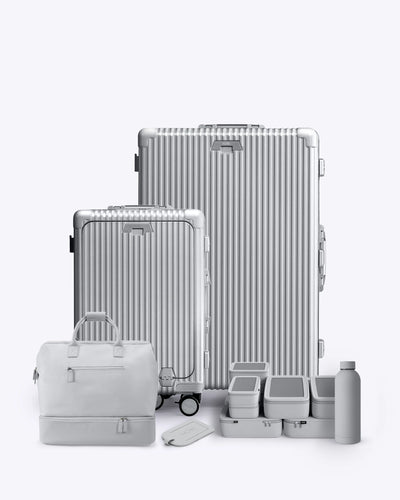
NOBL’s All-in-One Carry-On uses a polycarbonate shell with an aluminum frame, 360° spinner wheels, TSA-approved locks, built-in charging ports, a cup holder, and a 35L capacity. It is built for travelers who want more than a basic carry-on shell.
Which Material Is Better for Checked Luggage?
Polycarbonate is the more suitable choice for checked luggage.
Checked bags face rough handling, stacking pressure, conveyor belts, cargo holds, and baggage claim impact. This is where impact resistance matters most.
Polypropylene checked luggage may be fine for light, occasional use. But if you check bags regularly, polycarbonate luggage is the safer and more suitable long-term choice.
If you are comparing other hard-shell materials too, read NOBL’s guide to ABS vs polycarbonate luggage and aluminum vs polycarbonate luggage.
Which Material Lasts Longer?
Polycarbonate luggage typically lasts longer under frequent use due to its excellent durability.
Polypropylene can last several years with careful handling, especially as a carry-on. But polycarbonate has stronger impact resistance, better rigidity, better heat resistance, and better long-term performance under travel stress, all thanks to its excellent durability.
The answer changes slightly by traveler type:
|
Traveler Type |
Better Material |
|---|---|
|
Once-a-year vacation traveler |
Polypropylene |
|
Carry-on-only traveler |
Polypropylene or polycarbonate |
|
Frequent domestic flyer |
Polycarbonate |
|
International traveler |
Polycarbonate |
|
Checked luggage user |
Polycarbonate |
|
Heavy packer |
Polycarbonate |
|
Student or budget traveler |
Polypropylene |
|
Business traveler |
Polycarbonate |
Polycarbonate vs Polypropylene: Which Should You Choose?
Choose polypropylene if you want a lighter, more affordable suitcase for casual travel. It makes sense for students, occasional flyers, weekend trips, and carry-on travelers who do not check bags often.
Choose polycarbonate if you want stronger durability, better impact resistance, higher heat resistance, and a more premium feel. It makes sense for frequent travelers, international trips, checked luggage, heavy packing, and long-term use.
To make an informed decision, consider your travel needs and weigh the key differences between polypropylene and polycarbonate discussed above.
If price and low weight are your top priorities, polypropylene is the better fit.
If protection and lifespan matter more, polycarbonate is the better fit.
At NOBL, we favor polycarbonate because it gives travelers the strongest balance of durability, protection, structure, and style without moving into the heavier aluminum category.
Frequently Asked Questions
Is polypropylene luggage durable?
Yes, polypropylene luggage can be durable enough for moderate travel. It is lightweight, flexible, and practical for carry-on bags or occasional trips. The downside is lower impact resistance compared to polycarbonate luggage, especially under repeated checked-bag handling.
Does polycarbonate luggage crack easily?
No, good polycarbonate luggage does not crack easily under normal travel conditions. Polycarbonate is impact resistant and can flex under pressure, which helps it absorb hits without breaking. Surface scratches are more common than structural cracks.
Which luggage material is lighter?
Polypropylene is lighter. It has a density of about 0.905 g/cm³, while polycarbonate is about 1.20 g/cm³. That makes polypropylene a good option for travelers who care most about low empty suitcase weight.
Is polycarbonate worth the higher price?
Yes, polycarbonate is worth the higher price for frequent travelers, checked luggage users, business travelers, and international travelers. It costs more, but the stronger impact resistance and better temperature performance can make it a better long-term buy.
Which suitcase material scratches less?
Both materials can scratch. Polypropylene’s matte or textured surface usually hides scratches better. Polycarbonate’s glossier finish can show marks faster, though many premium polycarbonate suitcases use textured finishes, coatings, or luggage covers to reduce visible wear.
Which material is better for international travel?
Polycarbonate is well suited for international travel because it handles rough baggage handling, checked luggage stress, and temperature changes better than polypropylene. Polypropylene can still work for lighter carry-on use.
Which material is better for checked bags?
Polycarbonate is more suitable for checked bags. Checked luggage faces repeated impact, stacking, cargo pressure, and conveyor belt handling. Polycarbonate’s impact resistance makes it better suited for that type of travel.
Which material is better for carry-on bags?
Both can work. Polypropylene is suitable if you want a lighter and cheaper carry-on. Polycarbonate is suitable if you want a stronger carry-on that can handle frequent travel, heavy packing, or occasional gate checking.
Is polycarbonate better than ABS luggage?
Yes, polycarbonate is usually stronger and more impact resistant than ABS luggage. ABS is often cheaper, but it is more likely to crack under repeated stress. For more details, read NOBL’s guide to ABS vs polycarbonate luggage.
Is aluminum better than polycarbonate?
Aluminum is stronger against crushing and dents differently than plastic shells, but it is heavier and usually more expensive. Polycarbonate is lighter, more flexible, and easier to carry. Read NOBL’s full aluminum vs polycarbonate luggage comparison if you are choosing between premium materials.
Final Verdict: Polycarbonate Wins for Long-Term Travel
Polypropylene and polycarbonate both have a place in luggage.
Polypropylene is lighter, cheaper, and good enough for casual travelers who mainly use carry-ons. It is a smart choice when weight and price matter more than long-term toughness.
Polycarbonate is the stronger material for most serious travel. It offers better impact resistance, better heat resistance, better structural integrity, and a more premium finish. For frequent travelers, checked luggage users, international flyers, and heavy packers, polycarbonate luggage is the better long-term choice.
Use the information above to make an informed decision about which material best suits your travel needs.
If you want luggage built with polycarbonate strength, aluminum frame support, 360° spinner wheels, TSA-approved locks, and smart packing features, start with NOBL’s All-in-One Carry-On or Check-In: All-In-One 28”.
